Hemscheidt VSE
Tight turns, limited space and tyre wear
Hemscheidt VSE
Tight turns, limited space and tyre wear
Drivers encounter the physical limits of their combination every day. Narrow loading and unloading zones, tight exits and roundabouts demand maximum manoeuvrability. Without steered axles, the rear wheels move sideways through the bend. This makes the line difficult to control and accelerates tyre wear. With active trailer steering and self-steering axles, the combination follows the intended line better, even in tight bends and limited manoeuvring space. For trailer builders, the challenge lies in integration. A steering system must be quick to install, fit different axle brands and require little installation space. Complex or heavy systems increase production costs and limit payload.
What Trailer Steering delivers
More manoeuvrability, more control
With a steering angle of up to 45°, the system significantly reduces the turning circle. The trailer follows the truck in a controlled way, even at low speed and in sharp bends. This reduces corrective steering and increases control during manoeuvring.
At higher speed, the steering is automatically reduced. From around 25 km/h, the steering angle gradually decreases; from 55 km/h, the axles are in the straight-ahead position for stable driving behaviour on the motorway.
When in contact with an obstacle, the system supports alignment of the trailer. In the event of deactivation or a fault, the axles automatically lock in the straight-ahead position, so that the combination remains controllable.
What Trailer Steering delivers
Less wear, lower costs
Tyres are a major cost item. In non-steered trailers, lateral slip arises in bends, which accelerates tread wear. With active axle steering, the tyres roll more in line with the direction of travel, reducing wear.
Practical experience shows that tyres can last up to 400% longer, depending on deployment and operating conditions. Less friction also reduces rolling resistance, which can have a favourable effect on fuel consumption and CO₂ emissions. The load on axles and chassis is also reduced, contributing to longer maintenance intervals.
What Trailer Steering delivers
Easy to integrate, widely applicable
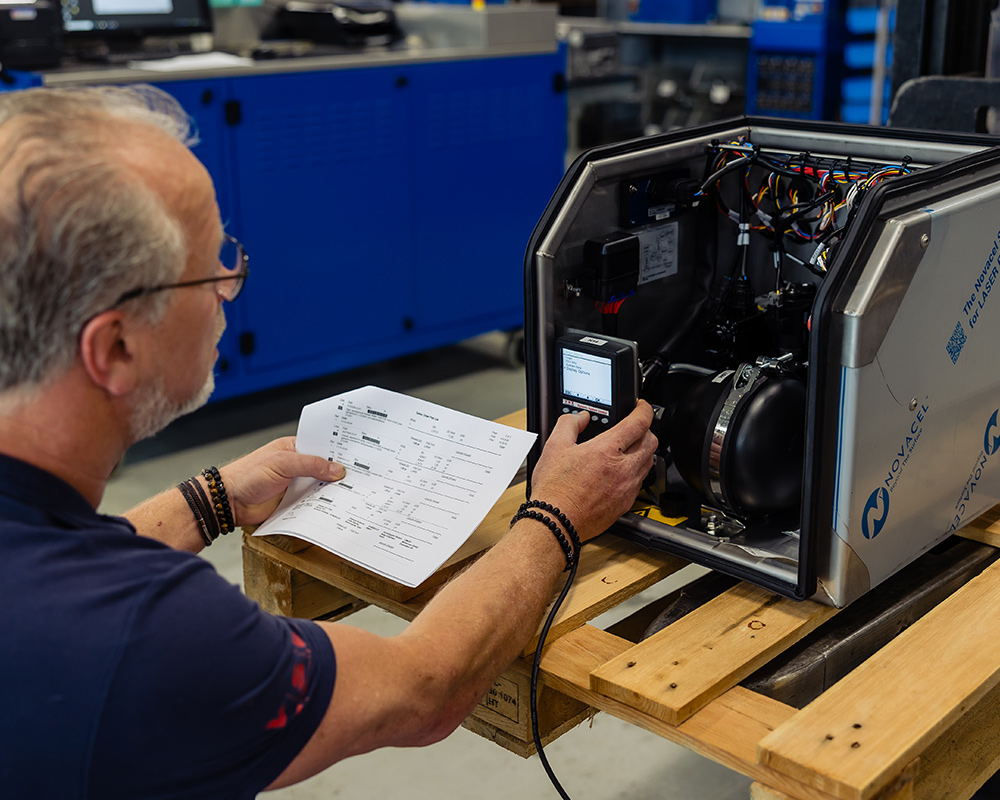
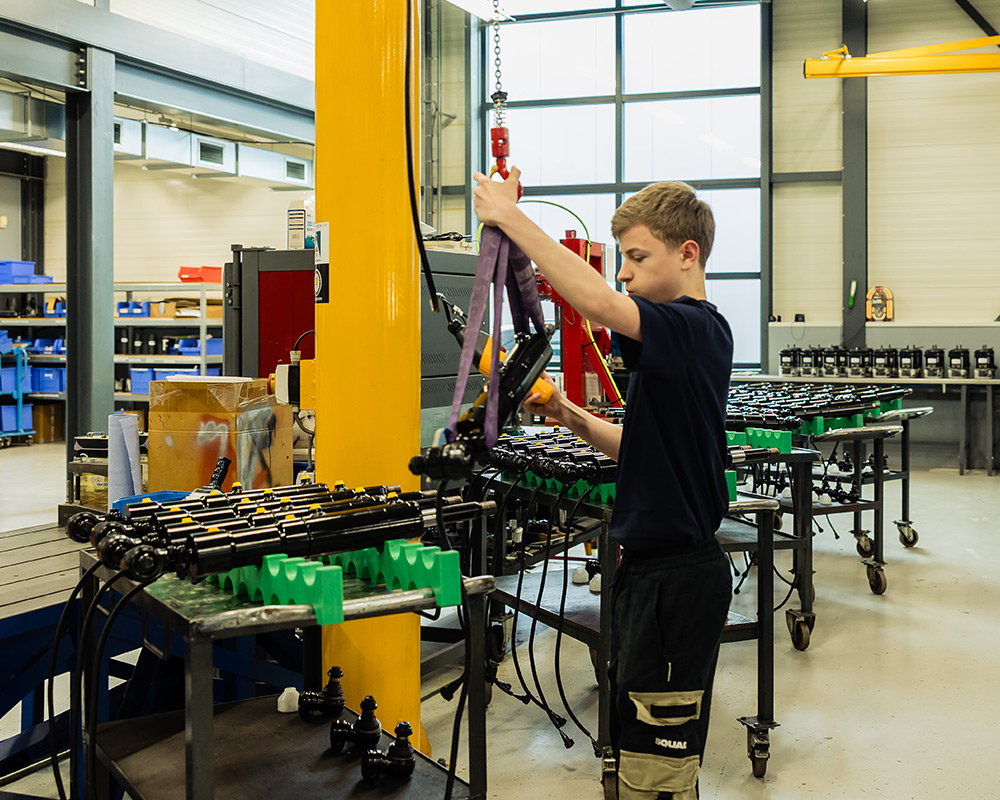
The systems have been developed as an integrable solution for trailer builders. The kingpin with sensor is mounted as a standard kingpin, without major modifications to the chassis. The stainless steel system box is supplied complete and can be directly incorporated into the body. Bleeding is not required, which simplifies commissioning and limits the specialist knowledge required. The systems are applicable to different axle brands and suitable for axle loads of up to 10 tonnes. Calibration is carried out using a diagnostic tool, without extensive adjustment work on the workshop floor. Thanks to their electro-hydraulic design, the systems are also lighter than many mechanical alternatives. Depending on the configuration, this can result in significant weight savings, which benefits payload.
The three systems: which system suits your application?
The three systems share the same basis: a steering angle of up to 45°, automatic speed-dependent control and a fail-safe locking mechanism in the straight-ahead position. The difference lies in the energy supply and the degree of flexibility in use.
| Basic Steering | Special Steering | Advanced Steering | |
|---|---|---|---|
| Energy supply | Electric pump on trailer, powered via the truck batteries | Truck motor pump (hydraulic) | Electric pump on trailer, powered via 24V/NATO connection |
| Steered axles | 1 | 1 to 3 | 1 to 3 |
| Suitable for | Standard trailer combinations | Fixed truck-trailer combinations | Trailers that operate with different trucks; optionally with AGM batteries for autonomous use |
| System weight | 160 kg | 80–190 kg | 160–470 kg |
Basic Steering is a standardised solution without customisation. The system is directly integrable and suitable for common trailer configurations.
Special Steering uses the truck’s hydraulic pump. This eliminates the need for an electric pump on the trailer. This system is applied in fixed combinations where hydraulics are already available.
Advanced Steering is designed for maximum deployability. The trailer can be used with different trucks and can optionally be equipped with AGM batteries for autonomous power supply, for example for use when stationary or for additional consumers.
Not sure which system suits your trailer concept or fleet? Contact a technical adviser for targeted advice.