Hemscheidt VSE
Why choose EMS for trucks?
Smaller turning circle in confined environments
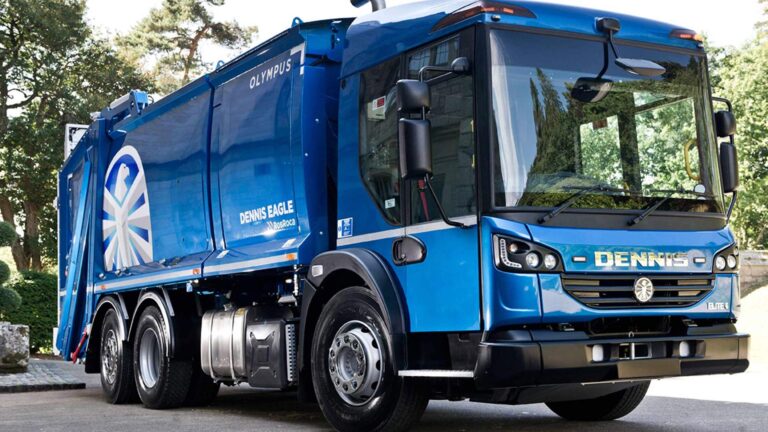
EMS actively steers the rear axle, reducing the truck’s turning circle. This gives drivers more control at low speeds and makes the vehicle easier to position in tight loading zones, narrow streets, construction sites and industrial estates.
More direct actuation, more compact architecture
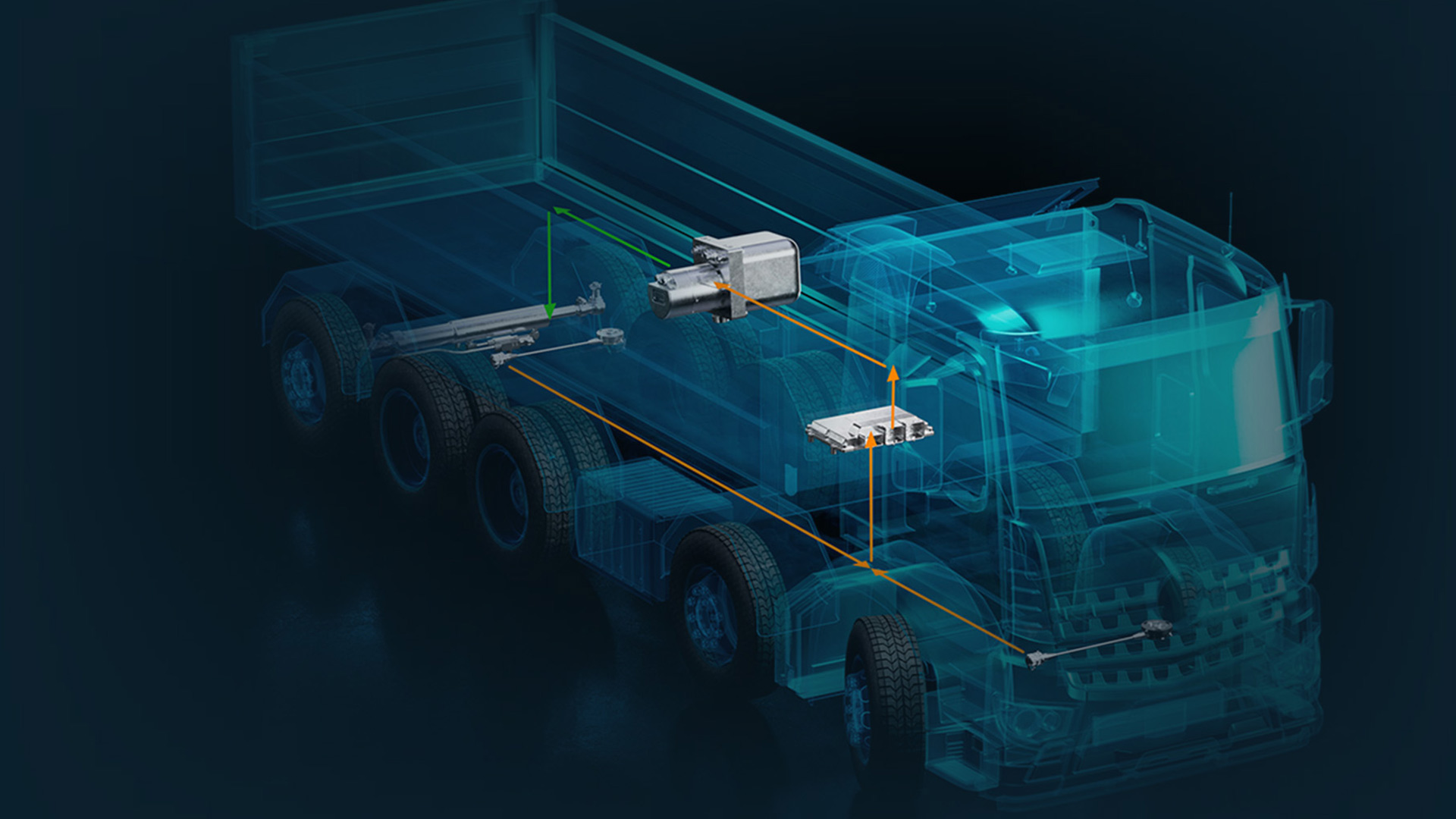
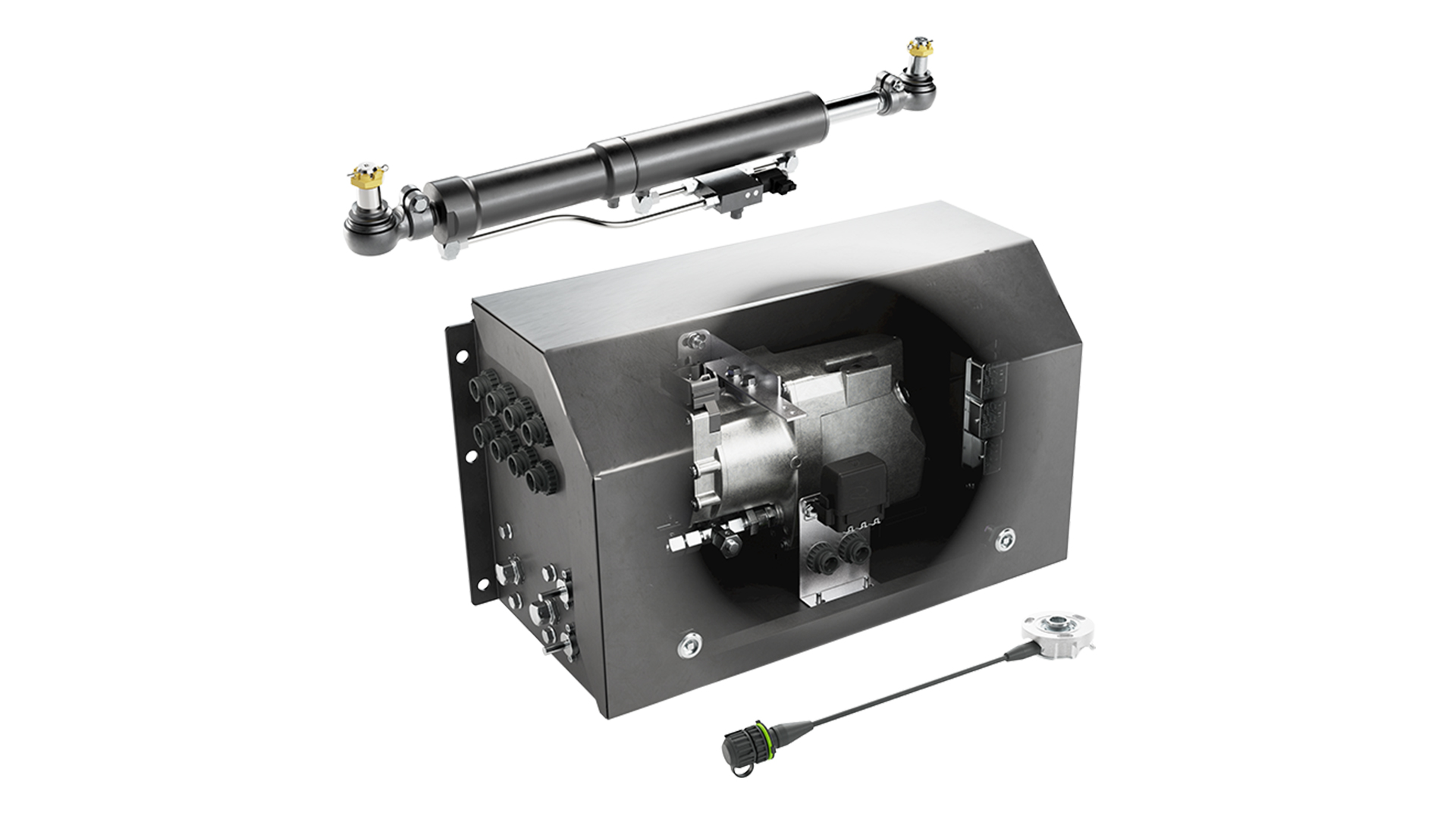
In ETS, a valve block distributes the hydraulic force to the steered axle. In EMS, that valve block is integrated into the pump, allowing the motor to actuate the axle more directly. This results in a more compact system architecture with fewer intermediate steps, lower energy losses and more efficient integration into the chassis.
Compact integration in electric truck platforms
The smaller system dimensions make EMS suitable for modern truck platforms where space is limited, particularly electric trucks where battery packs, driveline and cooling systems already require a large amount of packaging space.
Developed for ASIL-D
EMS is being developed to ASIL-D level, the highest safety level within ISO 26262. This makes EMS suitable for applications in which functional safety plays an important role, from urban distribution to specialist vehicle concepts.
Hemscheidt VSE
Advanced steering functionalities
Smart actuator functionality
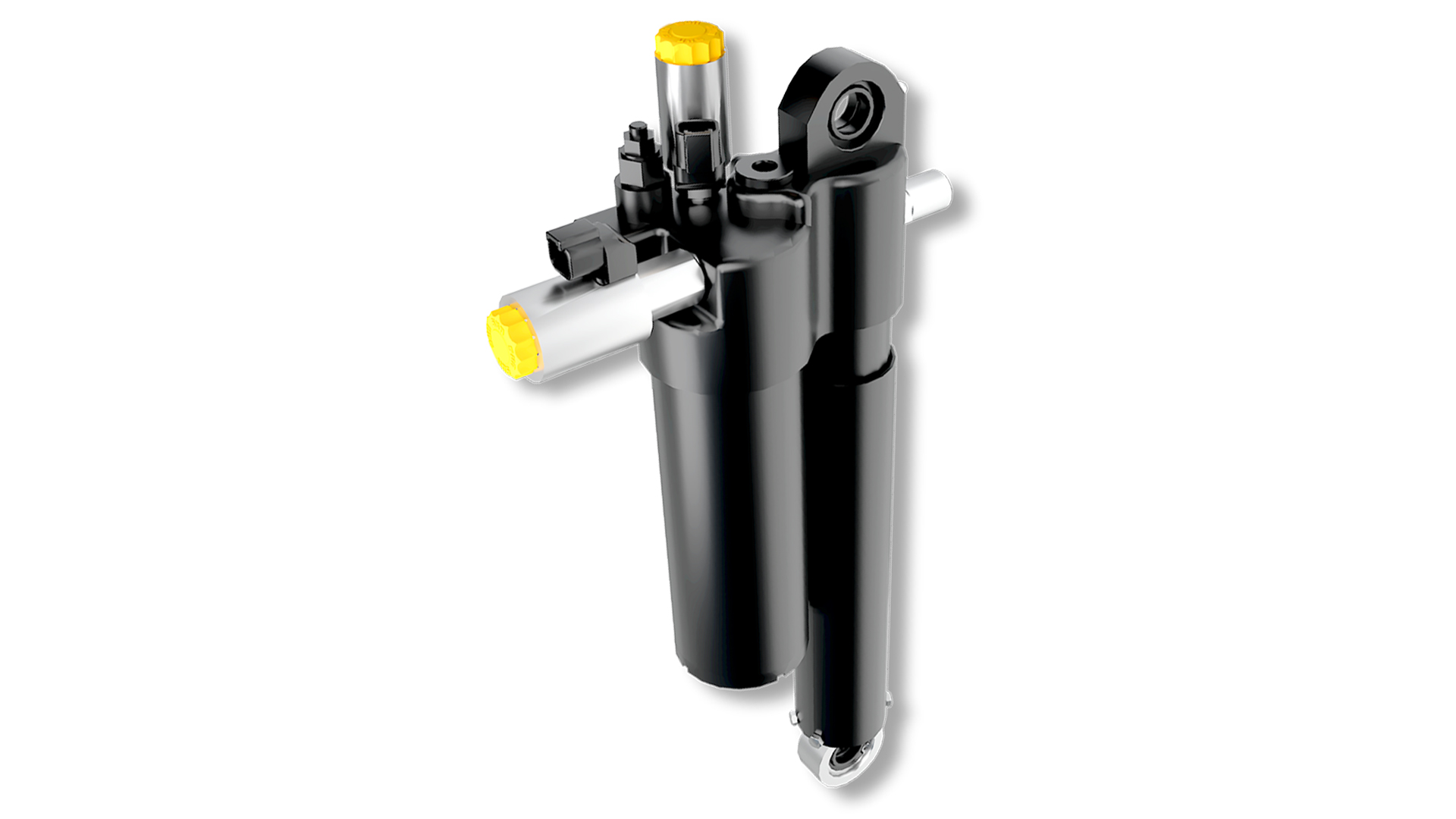
The vehicle platform sends a steering signal directly to the EMS system, which translates it into the desired axle movement. For OEMs, this provides greater freedom within their own software environment and fewer dependencies within the vehicle architecture.
Support for multiple steered axles
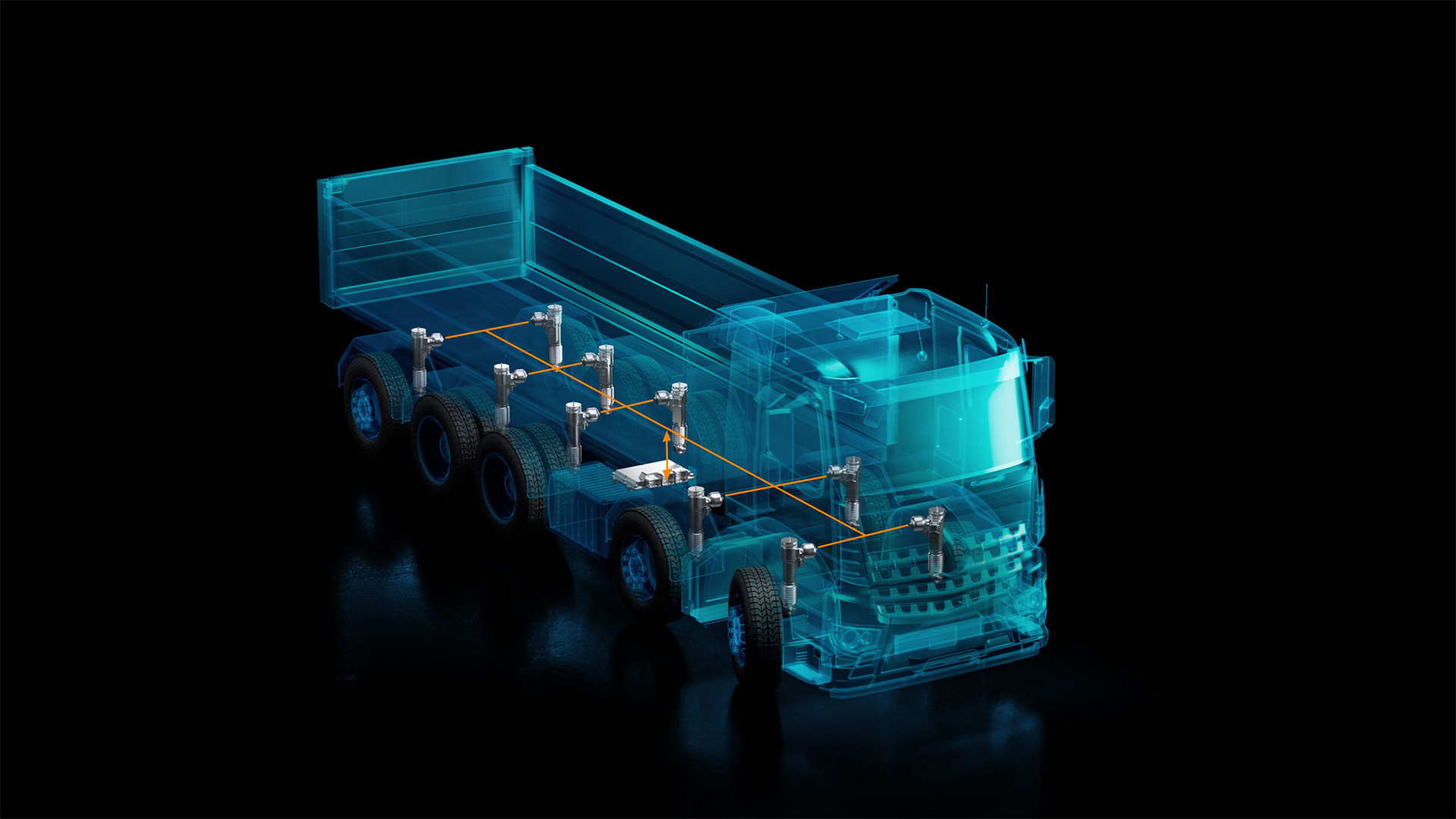
EMS supports multiple steered axles through parallel systems. This offers flexibility for complex truck configurations and specialist vehicles with high manoeuvrability requirements.
Crab steering on the roadmap
With crab steering, the front and rear axles move in the same direction, allowing the vehicle to shift sideways. This is a future function on the EMS roadmap and is not part of the functions available at launch. Vehicle manufacturers who require crab steering can incorporate this into the development process at an early stage.

Hemscheidt VSE
Join early as a development partner
EMS is being developed together with a limited number of vehicle manufacturers. This is a co-development programme, not a standard customer-supplier trajectory. Early partners can:
- Contribute technical requirements, axle configurations and integration questions at an early stage
- Be the first to develop and offer vehicles with EMS from launch onwards
- Work directly with engineers on integration and validation
- Help shape future roadmap functions such as crab steering and multi-axle configurations